
Call us now :08071930601
 Send Inquiry
 Send Inquiry
3-4 Way Ball Valve with Pneumatic Rotary Actuator
3-4 Way Ball Valve with Pneumatic Rotary Actuator Specification
- Connection
- Flanged / Threaded / Welded
- Caliber
- Full Bore / Reduced Bore
- Channels
- 3 or 4 Way
- Material
- Stainless Steel / Carbon Steel / Brass
- Power
- Pneumatic
- Media
- Water, Oil, Gas, Air, Steam, Chemicals
- Port Size
- 1/2 to 8
- Flange
- ANSI / DIN / JIS Standards
- Finish
- Polished / Coated
- Application
- Industrial Automation, Process Control, Water Treatment, Chemical, Oil & Gas
3-4 Way Ball Valve with Pneumatic Rotary Actuator Trade Information
- Payment Terms
- Cheque
- Packaging Details
- As per Requirement
- Main Domestic Market
- All India
- Certifications
- An ISO 9001 Certified Company
About 3-4 Way Ball Valve with Pneumatic Rotary Actuator
With our enormous domain knowledge, we are engaged in offering a broad assortment of 3-4 Way Ball Valve with Pneumatic Rotary Actuator. Fabricated in our well-developed infrastructural unit, this ball valve is manufactured by making use of optimal grade raw materials that are obtained from the certified vendors of the market. Our 3-4 Way Ball Valve is well-known for its accurate dimensions, robust construction and durability, and is offered in diverse shapes and sizes to meet the requirements of our clients.
Technical Specifications|
Model |
SUZ |
|
Actuator |
Single / Double Acting |
|
Size Range |
1/2" to 8" (Full Reduce Bore) |
|
Ball Valve |
3 - 4 Way L / T / X Port |
|
MOC |
CF8 / CF8M / WCB |
|
Ends |
Screwed / Flanged |
|
Socket Weld / Triclover |
Versatile Flow Management for Complex Systems
The 3-4 Way Ball Valve with Pneumatic Rotary Actuator allows precise routing and isolation of fluids through multiple channels. Its adaptability across different industriessuch as water treatment, oil & gas, and process controlmakes it integral to efficient automation. From choosing material options to selecting the appropriate connection type, this valve offers broad compatibility without compromising on reliability or durability.
Engineered for Robust Industrial Performance
Designed to withstand challenging media like chemicals, steam, and oil, these ball valves ensure seamless operation even in aggressive environments. The use of high-grade stainless steel, carbon steel, or brass, combined with multiple finishing options, delivers corrosion resistance and a longer service life. The pneumatic actuator guarantees consistent actuation, reducing manual intervention and enhancing overall process productivity.
FAQs of 3-4 Way Ball Valve with Pneumatic Rotary Actuator:
Q: How does a 3-4 way ball valve with a pneumatic rotary actuator enhance industrial automation?
A: The valve enables remote and rapid switching between various flow paths, automating process controls and improving system efficiency. Its pneumatic actuator responds quickly to control signals, reducing manual effort and ensuring precise fluid handling in applications such as water treatment, chemical processing, and oil & gas pipelines.Q: What factors determine the correct selection of material and finish for this ball valve?
A: Material selectionstainless steel, carbon steel, or brassdepends on the media (water, oil, chemicals) and the operating environment. Polished finishes suit hygiene-sensitive industries, while coated finishes provide added corrosion resistance for harsh processes. Considering these factors ensures optimal durability and performance.Q: When is it preferable to use full bore versus reduced bore configurations?
A: Full bore valves offer an unrestricted flow, minimizing pressure drops and making them ideal for processes where flow rate is critical. Reduced bore options are chosen when flow control or throttling is more important than volume, potentially reducing cost and weight for less demanding applications.Q: Where are these multi-way ball valves typically installed?
A: They are used in industrial automation systems, process control points, water treatment plants, chemical industries, and oil & gas networks. Installation environments often demand robust, leak-proof connections, which can be ensured by selecting appropriate flange, threaded, or welded ends per the required standards.Q: What is the benefit of using pneumatic power for actuating these valves?
A: Pneumatic actuation provides quick, reliable, and safe valve control, especially in hazardous or remote locations. It supports rapid switching, reducing cycle times and human intervention, which enhances operational safety and efficiency in high-demand industrial setups.Q: How do ANSI, DIN, or JIS flange standards factor into the selection process?
A: Selecting valves that conform to ANSI, DIN, or JIS flange standards ensures proper fit and integration with existing pipework. Choosing the correct standard prevents installation issues and guarantees compatibility with local regulatory and industry requirements.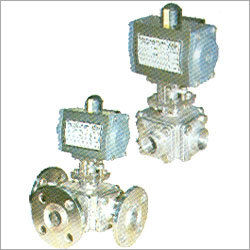
Tell us about your requirement

Price:
Quantity
Select Unit
- 50
- 100
- 200
- 250
- 500
- 1000+
Additional detail
Mobile number
Email

More Products in Fire Safe Ball Valve Category
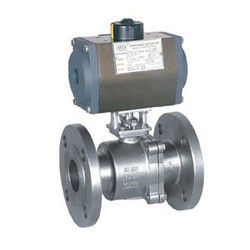
Fire Safe Ball Valve
Caliber : Full Bore
Structure : Other, Ball Valve
Power : Manual
Finish : Polished
Pressure : Other, Up to 40 bar
Material : Stainless Steel
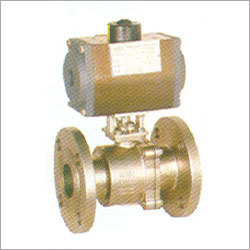
2 Pc. Ball Valve with Pneumatic Rotary Actuator
Caliber : Standard
Structure : Other, 2 Piece
Power : Pneumatic
Finish : Polished / Shot Blasted
Pressure : Other, PN16 / 150# / 10 bar
Material : Other, Stainless Steel (Body & Ball), PTFE Seats
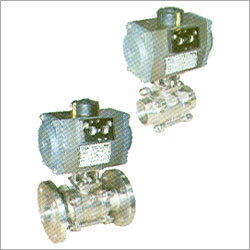
3 Pc. Ball Valve with Pneumatic Rotary Actuator
Caliber : Full Bore
Structure : Other, 3 Piece
Power : Pneumatic
Finish : Polished / Brushed
Pressure : Other, Up to 1000 PSI
Material : Other, Stainless Steel (SS 304/316)


 Send Inquiry
Our Products


B-301, 3rd Floor, Grace Chambers, Amrut Nagar, Chakala Naka, Andheri (E),Mumbai - 400093, Maharashtra, India

Mr Ashraf Pehlari Pehlari
(Partner)
Mobile :08071930601
 Send Inquiry
 Send SMS
 Call Me Free
Developed and Managed by Infocom Network Private Limited.
