About Fire Safe Ball Valve
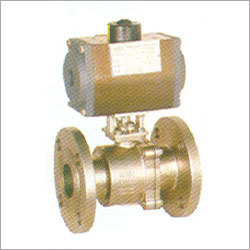
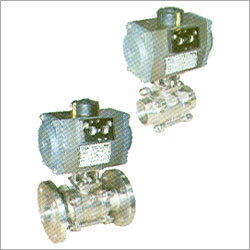
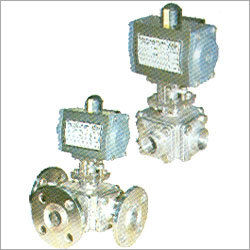
We are involved in offering a wide array of I.C. 2 pc Ball valve fire safe to our clients. These valves double & single acting actuation and are rack & pinion type. Our valves having mounting standards, which are in compliance with ISO 5211 (an international standard). Technical specifications of these valves are tabulated below: we are involved in offering a wide array of investment casting ball valve "fire safe" to our clients. These valves double & single acting actuation and are rack & pinion type. Our valves having mounting standards, which are in compliance with iso 5211 (an international standard). Technical specifications of these valves are tabulated below:
Technical specification :
|
Type
|
rack and pinion type
|
|
Actuation
|
double acting / single acting
|
|
Mounting std
|
iso 5211 an international standard
|
|
Pneumatic connections
|
namur standard
|
Refer pdf for more details :Tested and Certified Fire Safe DesignThis ball valve meets stringent API 607 and ISO 10497 fire safe standards, ensuring it maintains tight shutoff and integrity during extreme fire scenarios. The certified design delivers peace of mind for industrial facilities where fire protection is critical, such as petrochemical and oil & gas operations. The lockable handle and blowout-proof stem further reinforce operational safety.
Construction for Versatile Industrial UseFabricated from durable polished stainless steel with a full bore design, the valve is built for use in a wide range of industries, including chemical processing and fire safety systems. Flanged connections in ANSI, DIN, or JIS standards and face-to-face dimensions as per ASME B16.10 guarantee compatibility with global piping systems and allow for easy installation and maintenance.
Reliable Performance and Safety FeaturesBody seat materials such as PTFE, RPTFE, and graphite enable this valve to handle aggressive media and temperatures from -29C up to +200C. The antistatic device minimizes static electricity buildup, improving safety in hazardous environments. API 598 testing standards ensure dependable leakage control, while a quarter-turn operation provides rapid shutoff when needed.
FAQs of Fire Safe Ball Valve:
Q: How does the fire safe feature benefit my industrial application?
A: The certified fire safe design, tested to API 607 and ISO 10497 standards, ensures that the valve will maintain shutoff integrity even in the event of a fire, minimizing the risk of leaks and providing essential safety in oil & gas, chemical, and petrochemical industries.
Q: What media and temperature ranges can this ball valve handle?
A: The valve is suitable for a variety of media, including water, oil, gas, and chemicals, and is designed to operate reliably in temperatures ranging from -29C to +200C, making it highly versatile for demanding industrial environments.
Q: When should a fire safe ball valve be considered over a standard ball valve?
A: Fire safe ball valves are recommended whenever safety against fire-induced leaks is critical, such as in petrochemical plants, refineries, and fire protection systems, as they provide an additional layer of security compared to standard valves.
Q: Where can this ball valve be installed, and what industry standards does it meet?
A: It can be installed in systems conforming to ANSI, DIN, or JIS flange standards. The valve meets strict requirements, including design (API 607, ISO 10497), testing (API 598), face-to-face (ASME B16.10), and leakage class (Class VI), ensuring global industry compliance.
Q: What is the process for mounting actuators or gear operators on this valve?
A: The valve is equipped with an ISO 5211 mounting pad, allowing for straightforward installation of actuators or gear operators, which enhances automation and control options without additional adaptations.
Q: How is leakage control maintained during operation?
A: Leakage is minimized through precision manufacturing to Leakage Class VI standards and selection of high-performance body seat materials (PTFE, RPTFE, graphite), as well as thorough testing according to API 598.
Q: What are the benefits of the blowout-proof stem and lockable handle?
A: The blowout-proof stem enhances safety by preventing accidental stem removal under pressure, while the lockable handle allows for secure manual operation, reducing unauthorized access and ensuring process integrity.

 Send Inquiry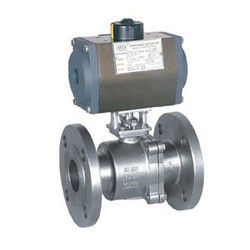

 Send Inquiry



 Send Inquiry


 Send Inquiry
 Send SMS
 Call Me Free
